


 Home
Home
 Implements
 Dealer
Quick Support
 Sales
Sales- +91 8888200022 / +91 7744911119
- Service
- +91 8888044448
 Email
Email- [email protected]
Connect socially


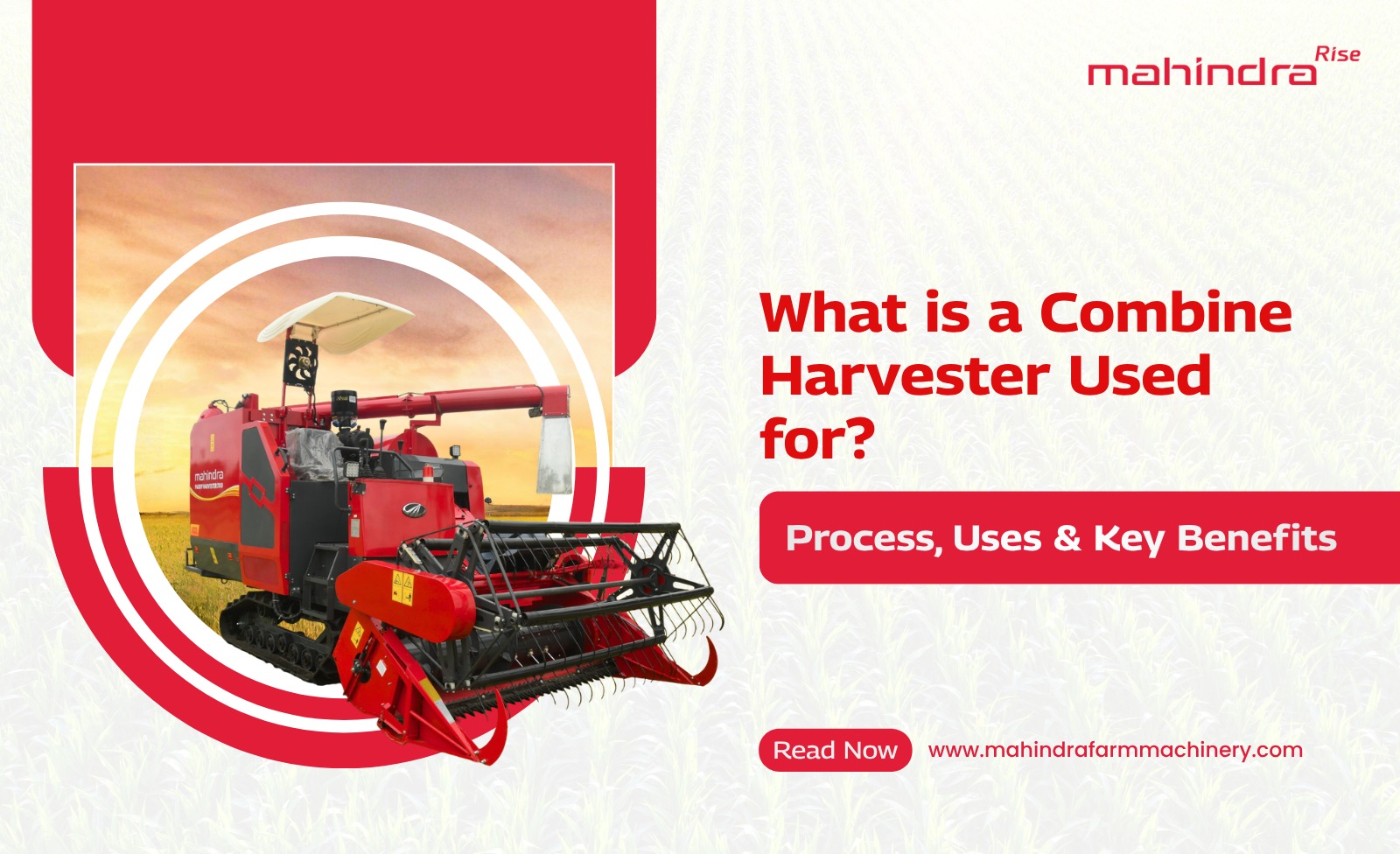
Ever wondered how large farms harvest acres of crops in just a few hours—something that used to take days or even weeks? That’s the power of a combine harvester.
For many Indian farmers today, time is money. Delayed harvesting can mean crop loss, lower quality, and reduced profits. This is where modern farm machinery like combine harvesters becomes a game-changer.
In this blog, we’ll break down what a combine harvester is used for, how it works, its real benefits, and how understanding the types of farm machinery and their uses can help you make smarter farming decisions. We’ll also explore how Mahindra Farm Machinery is helping farmers upgrade their harvesting game.
Let’s start by understanding what exactly a combine harvester does.
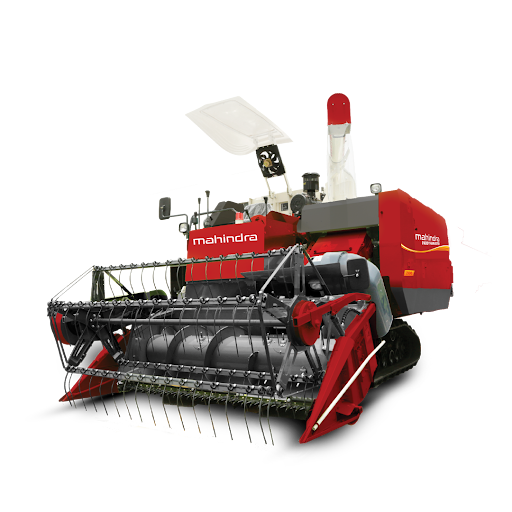
A combine harvester is a powerful agricultural machine designed to perform three essential farming operations in one go:
Reaping (cutting the crop)
Threshing (separating grain from stalk)
Winnowing (cleaning the grain)
Instead of using separate machines for each task, this single piece of farm machinery does it all, saving time, labor, and cost.
Understanding the process helps farmers use the machine more effectively.
Step 1: Cutting (Reaping)
The front part, called the header, cuts the crop and feeds it into the machine.
Step 2: Threshing
The crop enters a threshing drum where grains are separated from stalks.
Step 3: Separation
Straw walkers or rotors separate remaining grains from straw.
Step 4: Cleaning (Winnowing)
Fans blow away chaff and dust, leaving clean grains.
Step 5: Collection
Clean grains are stored in a tank, ready for unloading.
This entire process happens continuously, making combine harvesters one of the most efficient farm machinery tools available today.
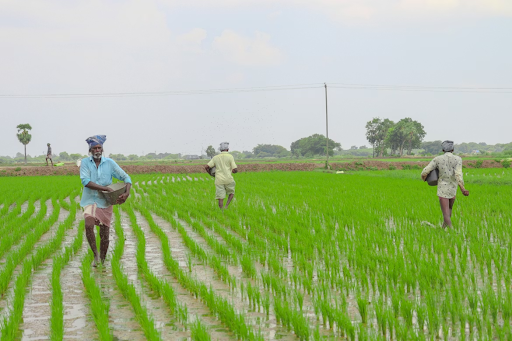
3. Uses of a Combine Harvester in Indian Farming
Combine harvesters are widely used across India for crops like:
Wheat
Rice (Paddy)
Maize
Soybean
In states like Punjab, Haryana, and Maharashtra, farmers are increasingly adopting this technology due to labor shortages and rising costs.
According to the Indian Council of Agricultural Research (ICAR), mechanized harvesting can reduce crop losses by up to 5–7% and increase efficiency significantly.
This is why understanding the types of farm machinery and their uses is becoming essential for modern farmers.
1. Saves Time
Harvesting that used to take days can now be done in hours.
2. Reduces Labor Cost
Less dependency on manual labor, especially important during peak seasons.
3. Minimizes Crop Loss
Precision harvesting ensures better grain recovery.
4. Improves Productivity
Farmers can cover larger areas in less time.
5. Better Grain Quality
Cleaner and uniform output leads to better market prices.
Farm mechanisation is a catalyst for sustainable agricultural growth – PWC Report
These benefits clearly show why combine harvesters are becoming essential in modern farm machinery setups.
To fully understand where combine harvesters fit in, let’s look at the broader picture.
1. Tractors
Used for pulling equipment, ploughing, and transport.
2. Combine Harvesters
Used for harvesting and processing crops efficiently.
3. Cultivators & Rotavators
Used for soil preparation and weed control.
4. Seed Drills
Ensure uniform seed placement.
5. Sprayers
Used for pesticides and fertilizers.
Knowing the types of farm machinery and their uses helps farmers build a complete, efficient farming system.

When it comes to reliable and efficient farm machinery, Mahindra Farm Machinery has built strong trust among Indian farmers.
What makes Mahindra stand out?
Advanced Engineering: Designed for Indian field conditions
Fuel Efficiency: Reduces operational costs
Durability: Built for long-term performance
Wide Range: Covers multiple types of farm machinery and their uses
Mahindra’s focus is not just on machines, but on solving real farmer problems.
Their harvesting solutions are especially noteworthy. Mahindra offers a strong lineup of combine harvesters tailored for Indian crops and terrains. These include:
Paddy Harvester and its variants – Specifically designed for efficient rice harvesting with minimal grain loss
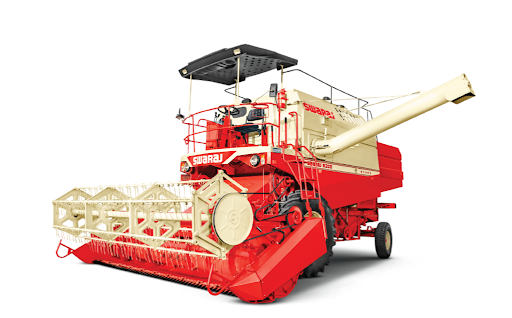
Swaraj 8200 Combine Harvester – Known for its powerful performance and reliability in large-scale farming.
Mahindra Paddy Harvester 2100- 88 HP
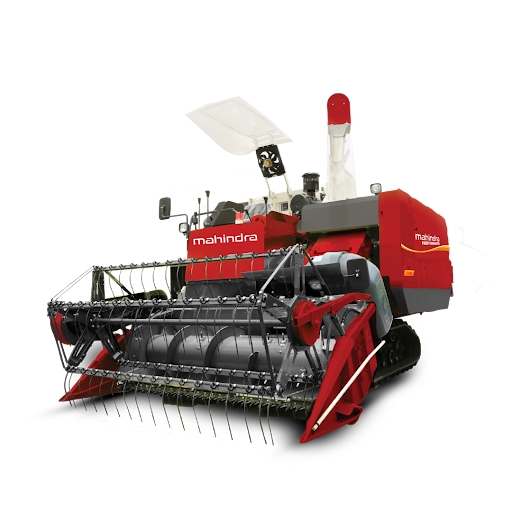
The Mahindra Paddy Harvester 2100 is a powerful and reliable solution designed for efficient paddy harvesting across Indian field conditions. Available in 88 HP and 102 HP variants, along with 53 and 56 lug options, it delivers superior performance in both normal and heavy crop conditions.
Built with advanced cutting, threshing, and cleaning technology, this harvester ensures minimum grain loss and maximum output quality. Its wide cutter bar, large grain tank, and high ground clearance allow smooth operation even in challenging terrains.
With fuel-efficient engines, low operating costs, and easy maintenance, the Mahindra 2100 enhances productivity while reducing downtime. It is an ideal choice for farmers looking for high acreage coverage, durability, and consistent performance.
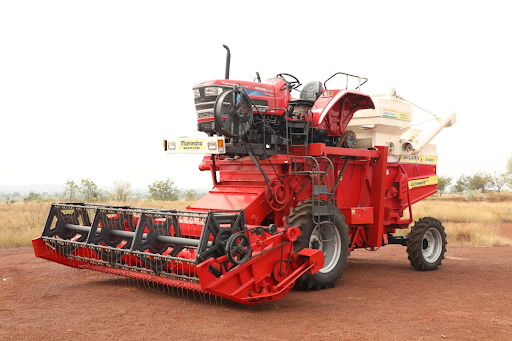
TMCH – Balkar Combine Harvester – Built for durability and high productivity across different crop conditions.
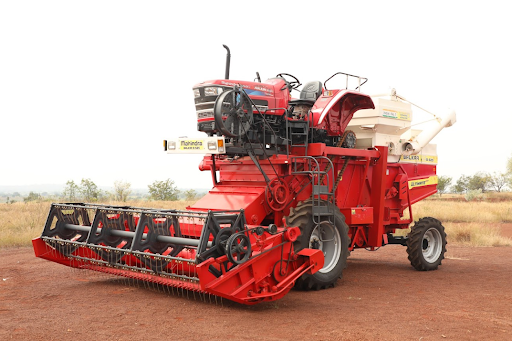
KS Combine Harvester – Offers efficient harvesting with optimised fuel consumption.
These machines are engineered to handle diverse agricultural needs, making Mahindra a one-stop solution for farmers looking to upgrade their harvesting efficiency.
With a strong service network and farmer-centric innovation, Mahindra ensures that its equipment delivers not just performance, but peace of mind.
When it comes to reliable and efficient farm machinery, Mahindra Farm Machinery has built strong trust among Indian farmers.
Advanced Engineering: Designed for Indian field conditions
Fuel Efficiency: Reduces operational costs
Durability: Built for long-term performance
Wide Range: Covers multiple types of farm machinery and their uses.
Mahindra’s focus is not just on machines, but on solving real farmer problems.
Their harvesting solutions are designed to handle Indian crops and terrains, making them a practical choice for both small and large-scale farmers.
Before investing in a combine harvester, keep these factors in mind:
✔ Crop Type
Ensure the machine supports your primary crop.
✔ Field Size
Larger farms benefit more from combine harvesters.
✔ Budget & ROI
Consider long-term savings, not just initial cost.
✔ Maintenance & Service
Choose brands with strong service networks.
✔ Fuel Efficiency
Lower fuel consumption means better profitability.
Understanding the types of farm machinery and their uses helps you choose equipment that fits your specific needs.
Final Thoughts
A combine harvester is not just a machine, it’s a productivity multiplier.
From saving time to improving crop quality, it plays a crucial role in modern agriculture. And with trusted brands like Mahindra Farm Machinery bringing innovation to Indian fields, farmers today have access to tools that can truly transform their farming practices.