


 Home
Home
 Implements
 Dealer
Quick Support
 Sales
Sales- +91 8888200022 / +91 7744911119
- Service
- +91 8888044448
 Email
Email- [email protected]
Connect socially


The rain has stopped, the field is still holding moisture, and the next sowing window is getting closer. So, should you take your Cultivator Tractor into the field or attach a tractor rotavator? The answer depends less on which machine is “better” and more on what your soil needs at that moment.
This is especially important in Indian farming, where monsoon rainfall can quickly change field conditions from workable to excessively wet. In fact, the monsoon accounts for around 70% of India's annual rainfall, making post-rain land preparation a critical part of farm planning.
A cultivator and rotavator perform different jobs. One primarily loosens and opens the soil, while the other actively breaks, mixes and pulverises it. Understanding that difference can help you avoid unnecessary passes, excess diesel consumption and damage to soil structure.
1. First Check the Soil—Not the Machine
After rainfall, the biggest mistake is assuming that wet soil automatically means it is ready for tillage.
FAO notes that “land preparation when soils are wetter than the optimum moisture content for tillage promotes soil compaction.”
Before entering the field, check whether the soil is workable. If it sticks heavily to the tyres or implement and forms a sticky mass rather than breaking into manageable crumbs, waiting for some drainage and drying may be the better decision.
Why does this matter?
Working excessively wet soil can:
Increase soil compaction
Create wheel tracks
Cause soil to stick to the implement
Increase tractor load
Affect soil structure
Make subsequent sowing more difficult
So, after a heavy shower, don't simply ask, “Cultivator or rotavator?” Ask, “What is the current soil condition?”
2. What Does a Cultivator Do After Rain?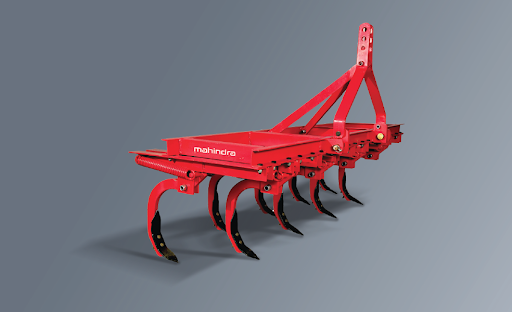
A cultivator is generally used for secondary tillage. Its tynes penetrate the soil, loosen the surface layer and break larger clods without aggressively pulverising the entire soil profile.
That makes a Cultivator Tractor combination useful when the field needs opening, loosening or moderate preparation rather than intensive soil pulverisation.
For example, TNAU lists tractor-drawn cultivators for secondary and intercultural operations, with typical working depths of around 100–150 mm.
A cultivator can be particularly useful when:
The field has started drying after rainfall
The soil needs loosening rather than fine pulverisation
Larger clods need to be broken
Crop residues or weeds need to be disturbed
You want to prepare the field with fewer aggressive passes
Mahindra Farm Machinery offers several cultivator configurations. Its Rigid Tyne Cultivator is designed for soil preparation, inter-cultivation and weeding, while its Adjustable Tyne Cultivators allow farmers to adjust the working arrangement for different crops and soil conditions.
For tougher conditions, the Mahindra Heavy-duty Spring Loaded Cultivator is designed with spring-loaded tynes and heavy-duty construction. Depending on the model, the range is available from 7 to 15 tynes and is suitable for tractors from approximately 35 to 80 HP.
3. When Does a Tractor Rotavator Make More Sense?
A tractor rotavator works differently. Instead of simply pulling tynes through the soil, rotating blades actively cut, break and mix the soil.
This makes a tractor rotavator useful when the objective is finer soil preparation, residue incorporation or creating a more refined seedbed.
After rain, however, timing becomes especially important. If the soil is excessively wet and sticky, rotating blades can smear or compact parts of the soil instead of producing the desired tilth.
On the other hand, when the moisture level is suitable, a tractor rotavator can help complete several soil-preparation tasks in fewer passes.
Research indexed by FAO AGRIS has also compared rotavator-based tillage with cultivator-based systems, highlighting how implement choice, operating conditions and number of passes can affect soil compaction, fuel use and tillage performance.
4. Cultivator vs Rotavator: Which One Fits Your Field?
Instead of looking for one universal winner, compare them according to the job you need to complete.
| Field Requirement | Cultivator | Rotavator |
| Loosening soil | Excellent | Good |
| Breaking larger clods | Good | Excellent |
| Fine seedbed preparation | Moderate | Excellent |
| Residue mixing | Moderate | Excellent |
| Inter-row cultivation | Excellent | Limited |
| Working after suitable rainfall | Good, depending on moisture | Good, depending on moisture |
Excessively wet, sticky soil | Avoid | Avoid |
| Finer soil finish | Moderate | Strong |
Instead of looking for one universal winner, compare them according to the job you need to complete.The important point is that neither machine should be selected simply because the field is wet.
A Cultivator Tractor setup may be the more practical choice when you mainly need to loosen and open the soil. A tractor rotavator may be more suitable when you need finer tilth and residue incorporation after the soil reaches an appropriate working condition.
5. Mahindra Options for Post-Monsoon Land Preparation
Mahindra Farm Machinery's land-preparation range includes both cultivators and multiple rotavator options, allowing farmers to select an implement according to soil type, tractor power and field requirement.
Mahindra Rigid Tyne Cultivator – suitable for soil preparation, inter-cultivation and weeding.
For farmers looking at a tractor rotavator, Mahindra's range includes Standard Duty UL, Medium Duty UM and Heavy Duty UH Rotavators, along with Mahavator and Mahavator HD models.
The Medium Duty UM Rotavator is particularly interesting for farmers dealing with medium soils. Mahindra specifies it for dry and wet conditions, with a helix spiral rotor configuration using C- and L-shaped blades. Its design is intended to help achieve finer tilth while reducing power draw, and an anti-clogging system is available to help manage wet soil sticking to the implement.
For heavier soil conditions, the Mahindra Heavy Duty UH Rotavator is designed for both dry and wet conditions. Depending on the model, it offers working widths of approximately 1.91 m and 2.134 m, with recommended tractor ranges of 45–60 HP and 50–65 HP respectively.
The Mahavator HD is another option for demanding applications, with a robust multi-speed gearbox and working-depth specifications of approximately 100–140 mm, depending on soil conditions.
6. Three Things to Check Before Entering a Wet Field
Check 1: Soil Moisture
Don't judge the field only by its appearance. Walk into it and assess whether the soil is workable. Excessively wet soil can lead to compaction and smearing.
Check 2: Tractor-Implement Matching
Your implement should match your tractor's available horsepower and PTO capability. A machine that is too large for the tractor can increase fuel consumption and operating stress.
Check 3: Working Depth
Deeper is not automatically better. The right depth depends on soil condition, crop requirement and the job being performed. Excessive depth can increase draft and fuel demand without necessarily improving the seedbed.
This is also why choosing the right implement configuration matters. Mahindra's cultivator range, for instance, covers different tyne counts and tractor-power ranges rather than treating every farm as the same.
7. Don't Forget the Number of Passes
One often-overlooked factor after monsoon rainfall is the number of times you take the tractor across the field.
More passes mean more wheel traffic, more fuel and potentially more soil disturbance. Research on tillage systems has found that reducing the number of passes needed to achieve the desired tilth can also reduce compaction caused by tractor traffic.
So, before choosing between a cultivator tractor setup and a tractor rotavator, decide exactly what the field needs. If one well-planned operation can do the job, there may be little value in repeatedly working the same soil.
8. The Smart Approach After Monsoon Rain
There is no one-size-fits-all rule for every Indian farm. Black soil in Maharashtra, medium soil in Madhya Pradesh and lighter soils elsewhere can behave very differently after rainfall.
The practical approach is simple:
Rain → Check soil moisture → Identify the field requirement → Match the implement → Set the correct depth → Minimise unnecessary passes.

Mahindra Farm Machinery's broad land-preparation portfolio means farmers can evaluate cultivators, rotavators and other implements according to their specific field requirements rather than forcing every operation through one machine.
The real advantage comes from making the implement work with the soil condition—not against it. And after monsoon rain, that small decision can influence everything from fuel use and field preparation time to the quality of the seedbed waiting for the next crop.