


 Home
Home
 Implements
 Dealer
Potato growing is one of the oldest, most prestigious kinds of farming due to the high demand and profitable returns, which is the backbone of many agricultural economies in the world. All you need to start a potato farming business is proper planning, equipment, and techniques. This blog will help you discover all the crucial tips and strategies for succeeding in potato farming by most importantly making use of a potato planter machine to maximize efficiency and yield.
Potato, the most common and versatile food in India! The consumption of potatoes will never stop. Potato agriculture is a business that would never die out. But what if someday you as a farmer fall short in planting or sowing potatoes? What if the productivity from your end decreases? In a situation like this, a potato planter comes in as the knight in shining armour and saves the day. And that is exactly the intention of this blog.
Rice is a staple food for more than half of the world's population. The cultivation of rice, however, can be labor-intensive and time-consuming. To ease the burden on farmers and improve efficiency, rice transplanters have been developed. These machines help in transplanting rice seedlings from nurseries to the field, ensuring uniformity and reducing manual labor. There are two main types of rice transplanters: the walk-behind type and the riding type. In this blog, we'll delve into these two types, exploring their features, benefits, and how they revolutionize rice planting.
Paddy cultivation is a precise process that requires careful planning and execution to ensure a successful planting. One critical step in this process is the preparation of a nursery for paddy seedlings, which are later transplanted into the main field using a rice planting machine. The use of a rice planter machine not only saves labor and time but also ensures uniform planting, leading to better crop management and higher yields.
In modern agriculture, the use of machinery is revolutionizing the way we grow crops, making processes more efficient and less labor-intensive. One such innovation is the rice transplanter machine, which significantly streamlines the process of rice transplanting. However, to maximize the benefits of this technology, proper paddy seed preparation is crucial. This blog will guide you through the steps of preparing paddy seeds for transplanting using a rice transplanter, ensuring a healthy and bountiful crop.
Understanding the Rice Transplanter Machine
Agriculture in India has undergone a significant transformation over the years. With advancements in technology, farmers now have access to a wide range of agricultural machines that help them increase productivity, reduce labor, and save time. These farm machines play a crucial role in modern farming, making the process more efficient and sustainable. Here, we'll explore some essential agricultural machines necessary for Indian farmers, including subtle promotions for some of the best products available in the market.
Paddy Harvester Machine
Rice transplanting machines have revolutionised the way we plant rice, making the process quicker and more efficient. However, like any piece of machinery, they require regular maintenance to keep them running smoothly and extend their lifespan. Here are some easy maintenance tips to ensure your rice transplanting machine stays in top shape.
1. Regular Cleaning
Rice serves as the staple diet for over half the global population, predominantly in Asia. Its cultivation is historically labour-intensive, requiring hours of manual work that can be tough on farmers. The paddy transplanter has emerged as a technological blessing, transforming traditional rice farming into a more efficient, less laborious process. This article explores the key features of paddy transplanters, their impact on agriculture, and how they could shape the future of rice farming.
In the vast and varied world of modern agriculture, few inventions have made as significant an impact as the combine harvester. These powerful agriculture machinery are central to modern farming, revolutionising how we harvest crops and, ultimately, how we feed the world. In this blog, we will explore the intricate process of how combine harvesters work, their purpose, and the manifold benefits they bring to farming.
What is a Combine Harvester?
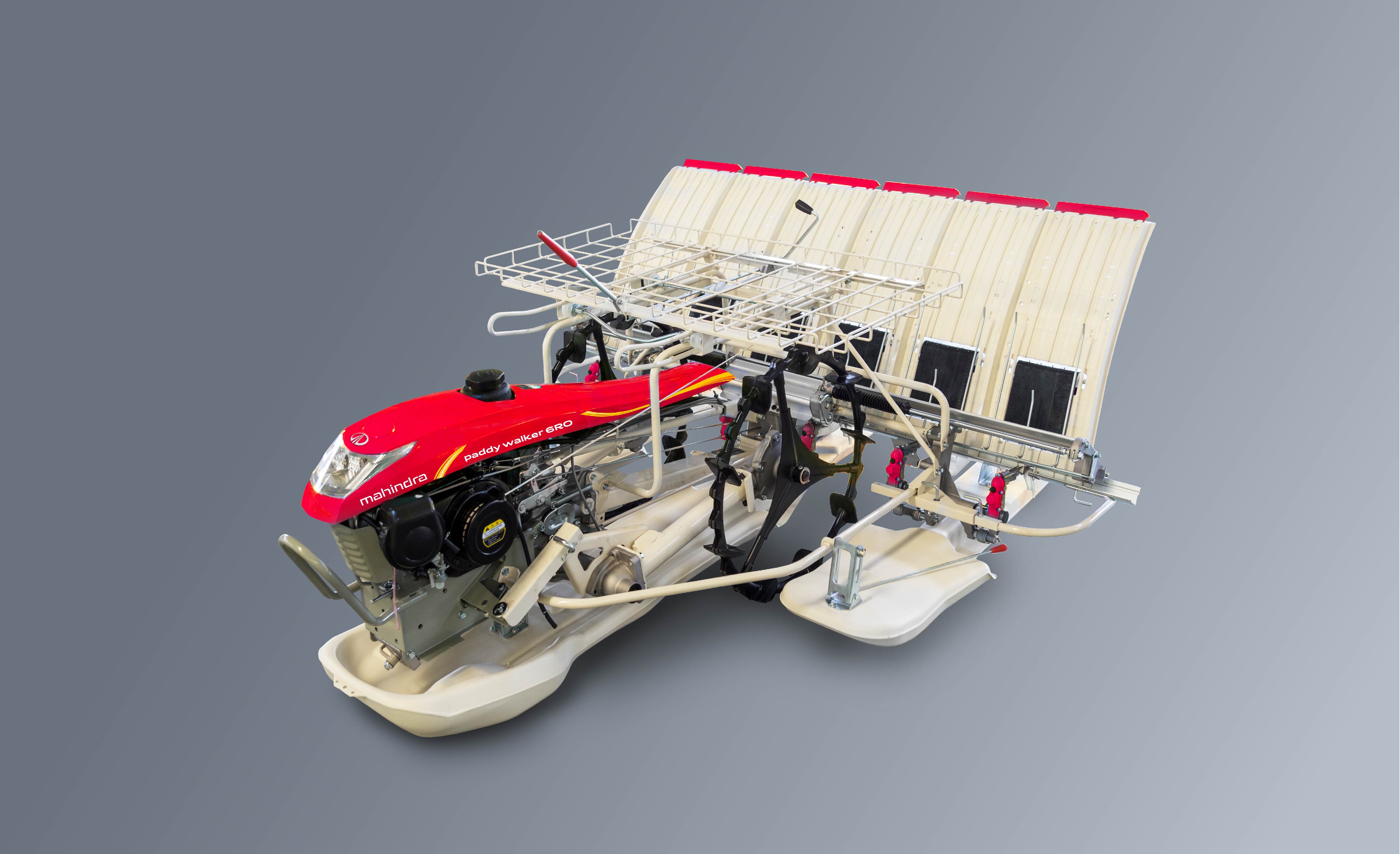
Mahindra Paddy Walker 6ROW
- Accurate 6ROW Paddy Transplanting
- Convenient and efficient
- Higher output and Lower fuel consumption
Avail Attractive Finance
Avail Attractive Subsidy
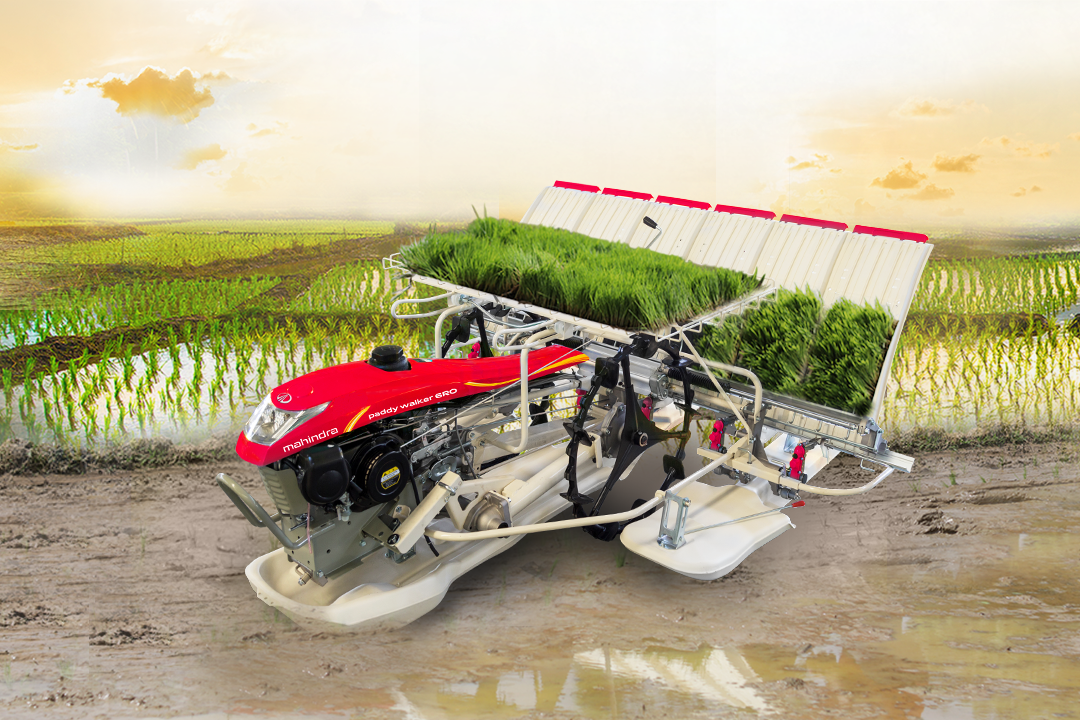
Mahindra Paddy Walker 6ROW is a top-tier Rice Transplanter designed for optimal precision in transplanting paddy seedlings. Its capacity to transplant in 6 rows simultaneously guarantees uniformity across the operational field. Featuring a robust gearbox and dependable engine, it maximises productivity while minimising fuel consumption, ensuring efficiency with every use.
Features at Glance
Technical Specifications
| Parameters | Specifications |
|---|---|
| Structure Form | Two Wheels Three Floating Plates Type |
| Working Dimension (mm) | 2370*1930*1150 |
Size of Wheel
| Parameters | Specifications |
|---|---|
| Diameter (mm) | 600 |
| Width (mm) | 90 |
| Lug Size (mm) | 79 * 90 |
| Lug Piece | 9 |
Engine
| Parameters | Specifications |
|---|---|
| Model | MZ175 |
| Type | Single-cylinder, four-stroke, overhead-valve gasoline engine |
| Starting System | Recoil starting |
| Fuel | Lead-free Petrol |
| Rated Power (kW) | 3.3 |
| Rotating Speed (r/min) | 3600 |
| Planting Speed (m/s) | 0.34-0.80 |
Planting Section
| Parameters | Specifications |
|---|---|
| Working Rows | 6 |
| Row to Row Distance (mm) | 300 |
| Seedling Space (mm) | 120/140/160/180/210 |
| Transverse taking seeding times | 14/16/18/20/26 |
| Longitudinal taking seedling depth | 7 to 17 |
| Planting Depth (mm) | 10 to 35 |
| Gearshift Method | Manual Gear Shifting (2F + 1R) |
| Type | Rubber Wheel Claw Type |
| Diameter (mm) | 660 |
| Width (mm) | 90 |
| Work - part Structural Type | Crank Rocker Type |
Get your product at the nearest Dealer
Mahindra Paddy Walker 6ROW
Useful Resources
Download BrochureOther Resource


 Sales
Sales Email
Email


